Subscribe Stay Updated with Insight On
Subscribe to our podcast today to get automatic notifications for new episodes. You can find Insight On on Amazon Music, Apple Podcasts, Spotify and YouTube.
By Insight Editor / 18 Feb 2026 / Topics: Cloud cost optimization , Virtualization , IT optimization , Modern infrastructure
The pricing changes have been in effect for about a year. The renewal conversations are heating up. And a lot of organizations are still not sure if they made the right call.
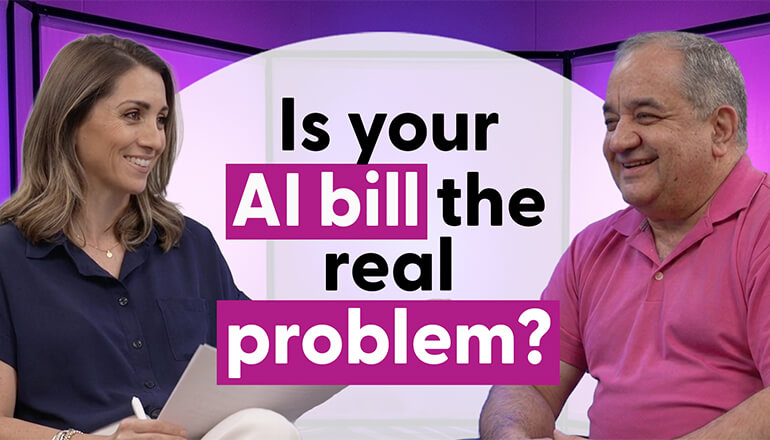
In this episode of Insight On, host Jillian Viner sits down with Juan Orlandini, Chief Technology Officer at Insight, for a direct, no-fluff conversation about where organizations stand with VMware by Broadcom — and what they should do next.
Juan has been in the room for these conversations for the past year and a half. He explains why the shift from à la carte to the full VCF bundle isn't just a pricing change — it's a vision change. Organizations that buy into Broadcom's true private cloud model are getting serious value. The ones that haven't are paying for capabilities they're not consuming.
He also walks through the most common and costly mistakes he's seeing: lift-and-shift migrations done without architectural review, cultural inertia blocking adoption of NSX, Aria, and vSAN, and organizations that don't know what they don't know heading into a hard renewal date.
If you're trying to figure out whether to stay, migrate, or just get smarter about what you already have — this is the episode to send to your team.
If you liked this episode, share it with a colleague.
Have a topic you’d like us to discuss or question you want answered? Drop us a line at jillian.viner@insight.com
— Juan Orlandini, CTO, Insight
Audio transcript:
Juan Orlandini:
What Broadcom is asking and steering the industry to, uh, to do is to build a true private cloud. And I mean that in the full sense of the work. Uh, uh, true private cloud is, uh, developer first. Uh, it's flexible, it's scalable, all those things that come from the cloud and many customers that buy into that vision, ultimately we'll see the value in the Broadcom suite, right? The ones that don't see that are gonna continue to struggle with the cost because you are buying capability that you're not consuming.
Jillian Viner:
Welcome to Insight on. If you're making technology decisions that impact people budgets and outcomes, you're in the right place. Hi, I am your host, Jillian Weiner, and today we're revisiting the conversation about VMware by Broadcom. Broadcom acquired VMware in 2023. They made some changes to the price structure, and those changes took effect in April of 2025. We're now about a year away from that date. And quite frankly, a lot of organizations are still trying to figure out if they've made the right decision, trying to decide what to do with their renewals, and it's kind of causing a bit of a tizzy. If that's you, this is an episode that is a must. Listen, we're sitting down with the Juan Landini, the Juan, or Landini. He's the Chief Technology Officer here at Insight, and he's been helping clients navigate this for the past year and a half. Juan gives great advice to make sure that you are making the right decision about your infrastructure and to make sure that you're getting the most value from your VMware investments. All right, let's go, Juan. It's so good to see you again. It's great
Juan:
To see
Jillian:
You. We sat down maybe a year ago to talk about VMware by Broadcom because companies were having to navigate the price changes and all that. It's still going on. We'll just go ahead and say it. There's still probably some heated conversations behind closed doors about what organizations need to do. Um, so I'm curious from your perspective, because as a CTO, you are talking to clients fairly regularly and helping them make these decisions. Um, when they sit down to look at their renewals, uh, is there some sticker shop that's still kind of wearing off, or are people still reaching for a stiff drink?
Juan:
There's a lot of stiff drinks being served. Uh, that's a good way to put it. Um, some of the price increases are, uh, very large, uh, many multiples of what they used to be before, and customers, uh, whether they were ready or not, always have a sticker shock over that. Yeah, right. So, uh, it, it's, it's an interesting time to navigate this water for the clients because they gotta truly understand whether or not they need to continue to invest in this platform or not. And that wholly depends on whether or not they buy into the Broadcom vision of what VCF brings to the table. Yeah.
Jillian:
'cause to be fair, it's not that they just raise the prices. There's, there's more at offer.
Juan:
That's right. That's right. So it, it used to be you had this a la carte model of buying componentry from Brocom, so you could, or VMware. So you could buy the hypervisor and, and the control planes, and then some additional high end networking and maybe the containerization thing, and you could mix and match and tailor fit it to your environment. Hmm. Now all of that, uh, Lego block building approach is, is gone and you get a kit, it's a Lego kit, , and, uh, you have to buy into the value of that. Right. Uh, and if you don't, it is gonna be sticker shock. Mm-hmm. It'll, it'll be like the death star, right? . Not everybody wants to build a death star . So, um, uh, although that is a cool Lego build, by the
Jillian:
Way, which is a cool Lego build, , but that's intense. Yes. Yeah. Uh, back then there were maybe some folks who were making some, we'll say emotional decisions and just claiming, Hey, we're just gonna jump ship, like, peace out, we're gonna go somewhere else.
Juan:
There was, uh, kneejerk is a
Jillian:
Great way, knee-jerk reactions. Yep.
Juan:
Kneejerk for sure. Uh, and those almost universally have become painful. Mm. Uh, and pain manifests itself in a couple ways. One is either technical and operational aspects mm-hmm . That come from that. And the other one is the financial side of it. And, uh, typically when you do any migration from a location A to location B, you should look at both sides of that equation. Uh, the technical merits of location B and the constraints that that brings to you mm-hmm . As well as the financial aspects of it, is, how's this, uh, gonna cost and operate and, and all that. And people that made the kneejerk reaction without looking at both of those, uh, are running into issues because there is no a, that's the same thing as B . They're different and you're gonna run into issues and you just gotta be aware of them.
Jillian:
Knee jerk reactions aside, are there examples that you're seeing? Don't give us names, but give us the example of like, don't be this person. What's a very costly mistake that an organization could make right now?
Juan:
Uh, the, the most costly, uh, mistake you can make is do a lift and shift where you pick up the workloads from A, and you migrate 'em without looking to B. Uh, and without reconsidering any architectural changes that might be required in order to do that. Um, that that is by far the biggest one, uh, because you are gonna run into issues guaranteed financial
Jillian:
Organizations are doing that. Yeah. Yeah. Their IT teams aren't saying like, Hey, red flag, this is gonna cause
Juan:
Issues. Sometimes it's an emotional response, sometimes it's a financial, I have to do it. Right. Got it. Uh, and now all of a sudden you're dealing with whatever's been dealt to you. Right. And, and it is what it is. Right? Yeah. Uh, the other one is, uh, is you really should reconsider, uh, the full suite of what Broadcom is bundling in their offerings. So we talked about the Lego approach versus the kit approach. Well, now you have a kit, and that kit is a vision of how you should be operating your infrastructure and broadly define, uh, what Broadcom is asking and steering the industry to, to do is to build a true private cloud. And I mean that in the full sense of the word, uh, uh, true private cloud is, uh, developer first. Uh, it's flexible, it's scalable, all those things that come from the cloud and many customers that buy into that vision, ultimately we'll see the value in the Broadcom suite. Right. The ones that don't see that are gonna continue to struggle with the cost because you are buying capability that you're not consuming.
Jillian:
You, I think, are alluding to this next question, but, you know, a lot of organizations in this kit are now paying for NSX Aria vsan, the whole VCF bundle that you mentioned. Their teams maybe haven't learned how to use this, maximize this. Exactly. Uh, they didn't budget for enablement, and now the renewal is coming up and they're thinking like, what, what is this? Am I actually paying for? Like, what is in this Lego kit? So where do you see the biggest gaps specifically of like, why they're not getting the most from this and what tends to kind of sit untapped?
Juan:
Yeah. And I think you, you touched on it by the way you phrased that question, is because there is training that's required and you have to do some operational changes to how you operate your infrastructure. Plus, there's also don't discount. There's cultural changes that come with that. Because if you got used to running it this way, and now you're being asked to run it this way, you're gonna have inertia inside of the organization to avoid that change because it might not seem all that valuable. Right. And cultural inertia is a huge thing, right? So, um, yeah, you do have to buy into it, and you do have to manage the technical aspects, the financial aspects, plus also the cultural side of truly adopting the full suite of services and products that are built into that.
Jillian:
I can't help but thinking, we talk about the change management piece almost every day now with ai. Oh, yeah. This is such an old practice that applies to every single part of, of business from the IT to the employee.
Juan:
Um, you know, people are people .
Jillian:
That's right.
Juan:
People
Jillian:
Are just people we don't like change.
Juan:
We don't like change. Uh, there's only a few nerds that love change and they thrive and change, right. And, and, and chaos and, and, and all that. But as organizations and especially in it mm-hmm . We, we built it to be a, a control agent, uh, because we didn't build it to be an innovation agent. Not really. Mm-hmm . Uh, there's other functions that are supposed to be innovation agents. Right. Um, so almost by DNA that's built into it. Uh, we want to have control, we want to have reduction of chaos, and this is chaos. And, and, and it's, it's causing consternation for sure.
Jillian:
I think that's your next TED talk . Um, let's talk about the flip side. Let's, let's be positive here. For organizations that are getting the full value from VMware, what does that look like? What are they doing differently?
Juan:
Differently? So the ones that are getting the full value of it are really have, have actually understood that they, hey, to do a true private cloud, I do have to offer these kinds of services to my consumers of my, uh, IT infrastructure. Uh, whether they're developers, uh, they need to have sets of APIs for doing front end and backend work, uh, for database persistence, for container management, for CICD workflows, all those kinds of things. Um, if you are a, um, more on the operation side of the house, you want to have some automation, you want to have some visibility, the SRE side of the house, all those, those things. So if you buy into this and you do deploy all of these capabilities, yeah. It's, it's all there. And the ones that are doing it well have actually made that transformation, are absolutely getting the value out of it. Because building this on your own from off the shelf, componentry, uh, uh, open source kinds of stuff, uh, that's hard. , it's really hard. There's a reason there's decades of investment in IP that Broadcom has made in the full suite of products that they bring to bear.
Jillian:
It's logical. A lot of organizations right now are trying to figure out how to build AI ready infrastructure. Um, does VMware fit into that picture specifically?
Juan:
Yeah. So this whole AI thing is moving so rapidly. It's almost breathtaking, right? It's every day, uh, I bring up my news feeds and there's some new crazy thing that's come out. And something that was super hot six months ago is now the old and busted, remember we were talking about MCP? Oh, that's, that's old and busted. That's right. Now it's age agentic. Now it's all these swarms of agents that we're, uh, are the new thing. You know, every day it'll be something new, right? Mm-hmm . So managing all of that change and iteration and chaos is, is really hard. And again, it is built around reducing chaos. Um, so a suite of products that help you reign that in while maintaining cost controls and all that, and doing it on a private cloud is hugely valuable. And that's actually what VMware has, uh, Broadcom has built into VMware. So that AI suite, uh, and you can do everything from the AI developer to the data scientists, to the operations people that need to make sure that they manage a fleet of GPU enabled servers.
Jillian:
Is there a capability right now specifically that's sitting in VMware that can be like unlocked to support AI workloads that maybe a hundred
Juan:
Percent. Yeah, a hundred percent. So one of the things that's built into it is that fleet management of GPUs, right? Mm-hmm . Uh, the other one is actually one of the things that they've done is integration into places like hugging face for, um, model exploration and downloading and all that other stuff. They've built in model versioning into their software. Because these models evolve just as rapidly as, uh, anything else. Yep. And, um, all of that is built into it. Uh, but again, you have to buy into the workflow that Broadcom is bringing to the table, and that's not necessarily maybe how your teams are used to operating. So this is part of the cultural change that needs to happen, but it's there from a technology perspective. Absolutely. It's
Jillian:
There. That's fair. We touched on the changing to not just the pricing model, but what's actually offered from the shelf to the whole package deal. But there was another big change that happened, which was the partner ecosystem of VMware changed. It became a lot more selective. So I'm imagining there's a lot of organizations that had an IT partner they were working with, that they would purchase Broadcom, VMware through that. Maybe that doesn't exist anymore. Have those organizations figured out how to pivot this? And if they're reevaluating their partner ecosystem, what should they really be looking for to make sure that this transition from, from Broadcom is going to be beneficial for them in the long run?
Juan:
Yeah. So there has been some changes there for sure. Uh, VMware, uh, prior to Broadcom had a huge partner ecosystem. And, and, uh, I am actually in complete agreement that it was overly large. Uh, essentially you could just go to their website and this is almost a hundred percent right, real, right? Uh, sign something, and all of a sudden you could resell VMware and make some margins, uh, doing that. Uh, that was essentially a transactional partner, and there was thousands of those around the globe. Uh, it brought little value other than the relationship that they had with the, uh, consumer. So if you're a technical buyer, uh, and you're looking at one of these transactional partners, you were getting nothing out of it other than the way of buying it, uh, technical help or any, any of that kind of stuff. Nothing, right? Yeah. Uh, and Broadcom didn't see that as being hugely additive to their business.
Juan:
So what they wanted to do is reduce the number of partners that they dealt with because it costs 'em money. It's difficult to manage a large partner ecosystem. Um, and through that narrow down to a set of partners that can bring not only the acquisition side of the house and managing licensing and all that, but also technical capability to help customers adopt that full vision that Broadcom is bringing with the suite of products that they have. So, uh, to get there, you have to make huge investments on our side. Uh, we have to, uh, train up our people, get 'em certified at a much higher level than we've ever had to. Uh, there's this night program that Broadcom is, uh, created that is really, uh, imagine the, the super nerd level, uh, guys and gals that really, really understand the deep bowels, how this stuff works, uh, not only in a technical manner, but also how do you actually educate consumers?
Juan:
How do you make sure that you're architecting things properly and then deploying them? So as a consumer of, uh, VMware, the product which you should be looking for is a partner that does have those capabilities. Because making that transformation is, it is difficult and you need to have somebody that can help you through the transition period and the transformation that you have to go through. Uh, 'cause there's a lot, there's a lot, a lot. And, and, and that's, that's what they've done. So, um, so in some ways it's been kind of difficult because you, you know, um, organizations buy from people that they trust, and those smaller organizations might have been what they trusted in the past. Mm-hmm . For whatever reason, not right or wrong. And now they have to change. And again, change is not something that we liked
Jillian:
. Yeah. But it makes sense. You're, it's a complicated pro program. It's a complicated system. You need someone, we're like the geek squad of,
Juan:
Of, I'd like to say that we're a little bit more than a geek squad
Jillian:
. Fair. Fair. But we know the intricacy. Like you need a partner that knows the intricacies of it, not just someone who can make it sound nice to convince you to buy it.
Juan:
Yeah. It, it is not just a, a selling aspect of it, for sure. Mm-hmm . Uh, but it's also the understanding what it truly means for your business. Yeah. Right. And there's a big difference between knowing the technical elements of it and, and also understanding why you would use those. Mm-hmm . So this is a true thing. When I interview people for jobs, I don't ask 'em how. Alright. Because how is actually pretty easy, especially now with ai. Uh, how do you configure this? How do you configure that? What button do you press? What command line do you use? Mm-hmm . Um, why is actually really hard? Why would you do that? And anybody that can help you answer the why is a huge value. And cus and customers should be looking for the people that can answer the why, not just the how.
Jillian:
So for organizations that have renewals coming up and they are doubting whether or not they're getting the right value from their products, how do you arm them with the right information to ask the right questions, whether they're going to their partner with those questions, or maybe they have to talk to their IT teams to find out what are we missing and how do we make sure that we are getting out of this what we're paying for?
Juan:
Yeah. It's actually not a very simple answer. Uh, the good news is that we actually have a set of services, and I hate to sound like that, right? If you don't get 'em from us, uh, get 'em from somebody that has something similar. And that is to actually do an assessment of your environment. What are you consuming? What are you over consuming, what are you under consuming, what are areas of improvement in your operational aspects and your financial aspects, whatever that is. And, and, and then actually get a complete picture. Uh, and that'll actually show you a true delta, uh, between, uh, what you're looking to pay versus what you're actually consuming. Mm-hmm . And how to gap, uh, uh, bridge that gap. Um, and we offer that. And, and there's actually some lighter weight versions that we do on a, on, uh, on a presales, uh, uh, mode, no investment from the customer. But then also there's deeper ones where we actually go really deep and those are our for pay. Um, obviously we, we,
Jillian:
It's a lot of time and invest,
Juan:
It is a lot of time mm-hmm . And we're sending a lot of smart people to do this, so mm-hmm .
Jillian:
But ultimately you're gonna figure out exactly where those gaps are.
Juan:
That's exactly right. Right. Okay.
Jillian:
Um, last question. For the person who's listening and thinking, that's us, we are for sure not getting the value that we are paying for out of VMware. What is their first move? Is it doing one of those low bar assessments or is it something a little bit deeper than that?
Juan:
It is. I, uh, absolutely. It's all right. Um, again, it's the, uh, the carpenter thing is there, right? Measure twice, three times before you cut once, right? And that is your measurement. That that is absolutely what you have to do. And you do have to look at not just the technical and the financial, but the operational side of the house and make sure you truly get all three legs of that stool. Uh, and then once you understand that, then you can actually make a much more informed opinion or decision.
Jillian:
The last time we talked, the, I think the leaving advice you gave was for everybody, just take a deep breath before they make any hasty decisions. Again, it's been two years since the changes was your advice today
Juan:
Depends on where you are in your res uh, re um, renewal cycle, right? If you're coming up against a hard renewal and you haven't done that analysis, do that analysis right now, . Alright? Because you need to understand where you really are, right? If you're in the midst of that cycle, um, and now you have some, uh, runway to understand for the next one what's gonna happen, let us help you come in and, and take a look and see, hey, is there ways to improve the processes, consume more of the services, transform how you're doing these things, uh, or, uh, whatever other alternatives are out there so you can be better prepared when it's time for that renewal. That's coming up down the road
Jillian:
Pretty clear. Juan, thanks so much.
Juan:
Thank you.
Speaker 3:
Thanks for listening to this episode of Insight on. If today's conversation sparked an idea or raised a challenge, you're facing, head to insight.com. You'll find the resources, case studies, and real world solutions to help you lead with clarity. If you found this episode to be helpful, be sure to follow insight on, leave a review and share it with a colleague. It's how we grow the conversation and help more leaders make better tech decisions. Discover more@insight.com. The views and opinions expressed in this podcast are of those of the hosts and the guests, and do not necessarily reflect on the official policy or position of insight or its affiliates. This content is for informational purposes only, should not be considered as professional or legal advice.

Marketing Manager, Insight
As marketing manager for the Insight brand campaign, Jillian is a versatile content creator and brand champion at her core. Developing both the strategy and the messaging, Jillian leans on 10 years of marketing experience to build brand awareness and affinity, and to position Insight as a true thought leader in the industry.

Chief Technology Officer, North America and Distinguished Technologist, Insight
Juan is Insight’s chief technology officer, North America, and one of Insight’s distinguished technologists. He is a 30-plus-year veteran of the IT industry and has designed and deployed enterprise computing, storage, data protection, virtualization and hybrid cloud solutions. Juan evaluates next-generation technologies for Insight and works with enterprise clients, assisting them in architecting and selecting strategic roadmaps. In his current role, Juan designates champions of the technology community within Insight and drives events that promote thought leadership, professional development and knowledge sharing.
Subscribe to our podcast today to get automatic notifications for new episodes. You can find Insight On on Amazon Music, Apple Podcasts, Spotify and YouTube.